

Product clarity
Show what makes the item useful.
 Explore the intent
Paid media strategies for online stores focused on profitable acquisition, product visibility and conversion.
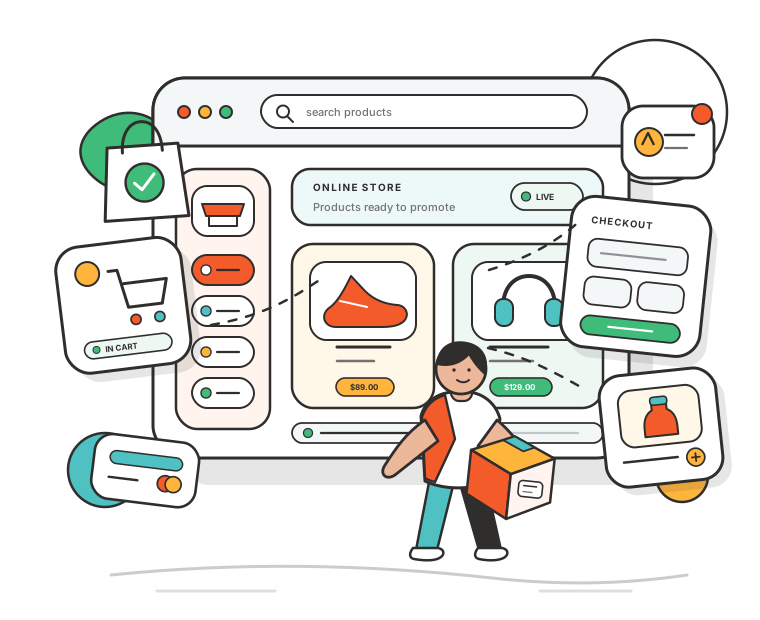
Build a discovery experience that makes the product useful, distinctive and easy to understand. Keep the promise consistent from feed to shop.

A product page should make the choice clearer. Give the details that matter room to be understood.
Discuss the possibilitiesExplore the parts that make the whole experience stronger.
Show what makes the item useful.
Explore the intentConnect the item with a real need.
 Shape the experience
Answer the final useful questions.
 Connect the details
Choose the level of support around your business. Scope and pricing are agreed together.

Tailored to your scope
Discuss focus
Tailored to your scope
Discuss build
Tailored to your scope
Discuss partnerThoughtful methods. Practical decisions.
Understand the context, recognise the gaps and decide where to focus first.

Turn a clear hypothesis into a considered test, with useful signals to guide the next step.
Explore how the work connects, from the first decision to the next improvement.

Start with the context and shape a structure that makes sense for your business.
Useful product data guide the work. We agree priorities, review the current setup and document what needs to change.
Remove friction and make the important information easier to understand.
Distinctive products guide the work. We agree priorities, review the current setup and document what needs to change.

Connect a clear message with a relevant moment in the customer journey.
Confident purchases guide the work. We agree priorities, review the current setup and document what needs to change.
Review what happens next and use the evidence to refine the experience.
Useful product data guide the work. We agree priorities, review the current setup and document what needs to change.
Start with a shared understanding of the audience and the business context.

Bring the essential details together in a clear, considered experience.
Connect the next action to a useful outcome and a defined way to review it.
A product feed is part of the customer experience, not just a file.
Help shoppers understand the product before asking them to choose.
A relevant discovery deserves an equally considered checkout.
Common questions about Shopping Ads, products, tracking and scaling online-store acquisition.
Discuss Your StoreYes. E-commerce work can include Shopping campaigns, product advertising, feed structure, search campaigns and conversion measurement.
Yes. Existing campaigns, product structure, tracking and feed quality can be reviewed before deciding which changes are useful.
Yes. Product titles, attributes and data influence how advertising platforms interpret inventory and match it to customer demand.
No. Advertising results depend on competition, product demand, margins, pricing, website conversion, budget and market conditions.
Purchase and revenue tracking are important because campaign decisions need more context than conversion count alone.
Scaling should be based on meaningful campaign, product and conversion signals rather than increasing budget simply because a campaign is active.